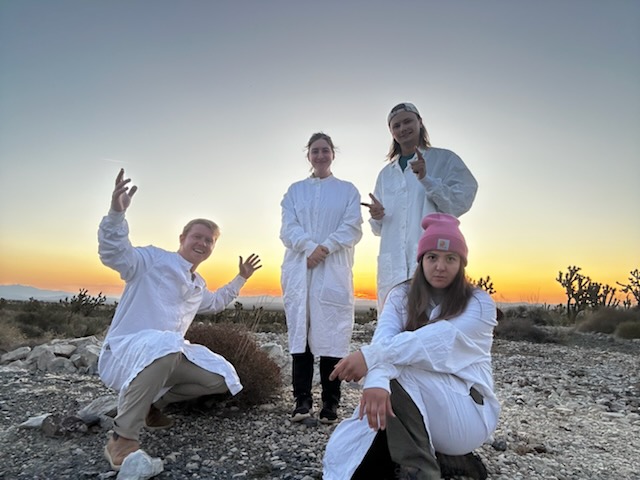
The Inventory & Monitoring (I&M) Division of the National Park Service (NPS) works to collect long-term ecological data intended to provide our national parks with crucial measures of the “vital signs” of the parks. More specifically, GBI has been working with NPS in support of projects for the Mojave National Inventory and Monitoring Network (MOJN) involving monitoring of upland shrub growth and riparian spring communities. And here we spotlight the work being done for MOJN on bat populations.
Heading up the bat crew is Casey Devine-Rosser, who runs the logistics of implementing acoustic surveys and white-nose syndrome surveillance in the network. Casey generously agreed to answer some questions about the work that he and the crew are doing on behalf of MOJN.
What is the nature of the work that you’re doing in MOJA?
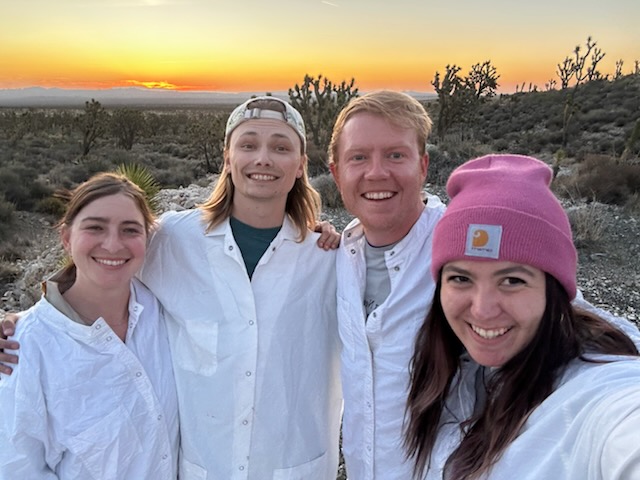
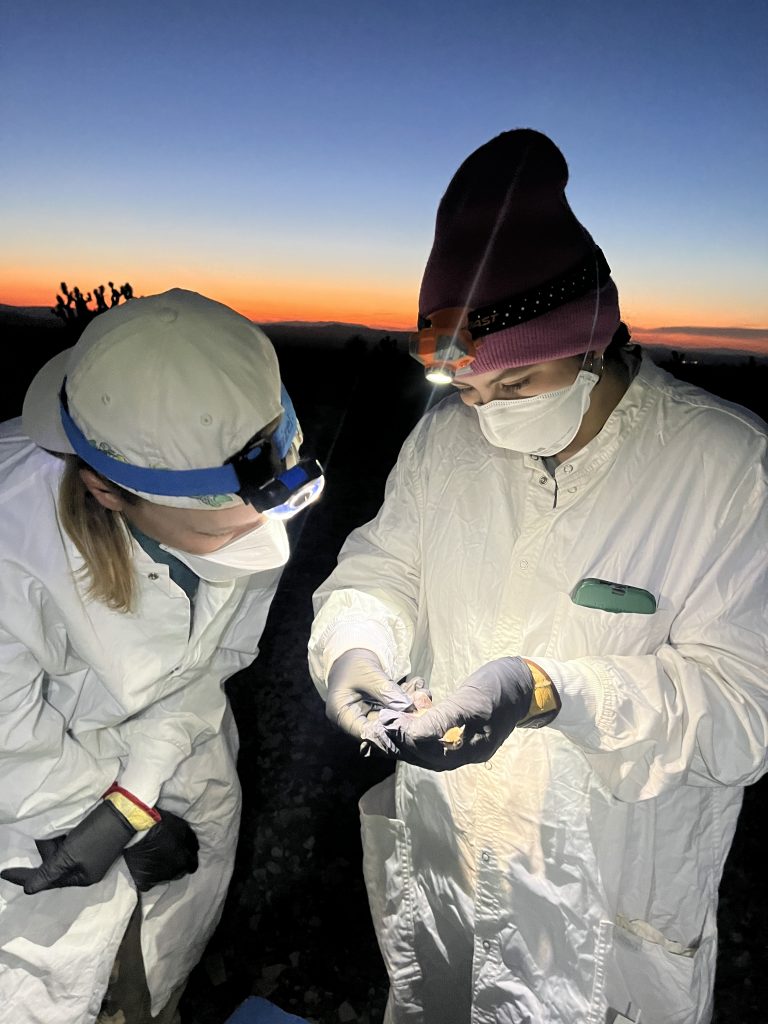
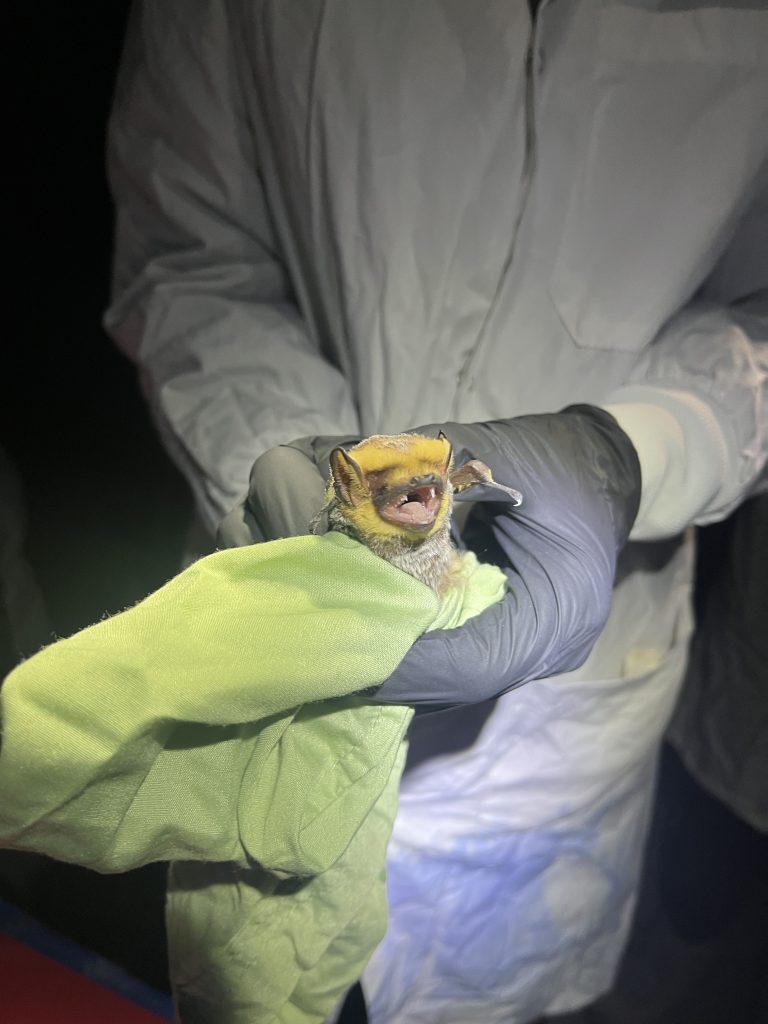
I am the bat crew lead for the Mojave Inventory & Monitoring Network which assists in conducting scientific research at nine different parks located within Arizona, California, and Nevada. We monitor vital signs throughout the parks to determine the species richness of bats, detect changes in species activity over time, and swab sample bats to identify if White-nose fungus (WNS) is present within any of the parks. We use acoustic detectors that pick up bat calls to identify the species within various areas of each park and submit our findings to a national database (NABat) in order to generate a robust understanding of general bat activity throughout our landscape. We also capture bats at each park by mist netting them over springs, vegetated corridors, or known roosts to identify species richness, capture morphological data, and swab sample bats for WNS.
Describe your relationship with other participants, GBI or NPS partners.
I previously worked with MOJN last year as an NPS partner through Bat Conservation International and enjoyed my time here enough to return as the bat crew lead through GBI this year. I constantly work with an array of people working for NPS, NPS partners, and various volunteers from different backgrounds. I currently only have one employee in my crew so we often require assistance with our projects, which often creates opportunities for people with different backgrounds to join in on field work not many get to encounter. It is rewarding getting to work with such a variety of people from different parks, agencies, and qualifications because we not only get to show them bats up close and personal, but we often get to share wildlife stories and experiences that allow for a cross-training culture that benefits anyone that joins. During this federal uncertainty and ever-changing wildlife world, it has been invaluable getting to talk to other individuals, learn from them, and bring them into our batty world for just a moment.
Are there any moments/stories from the field that stand out to you?
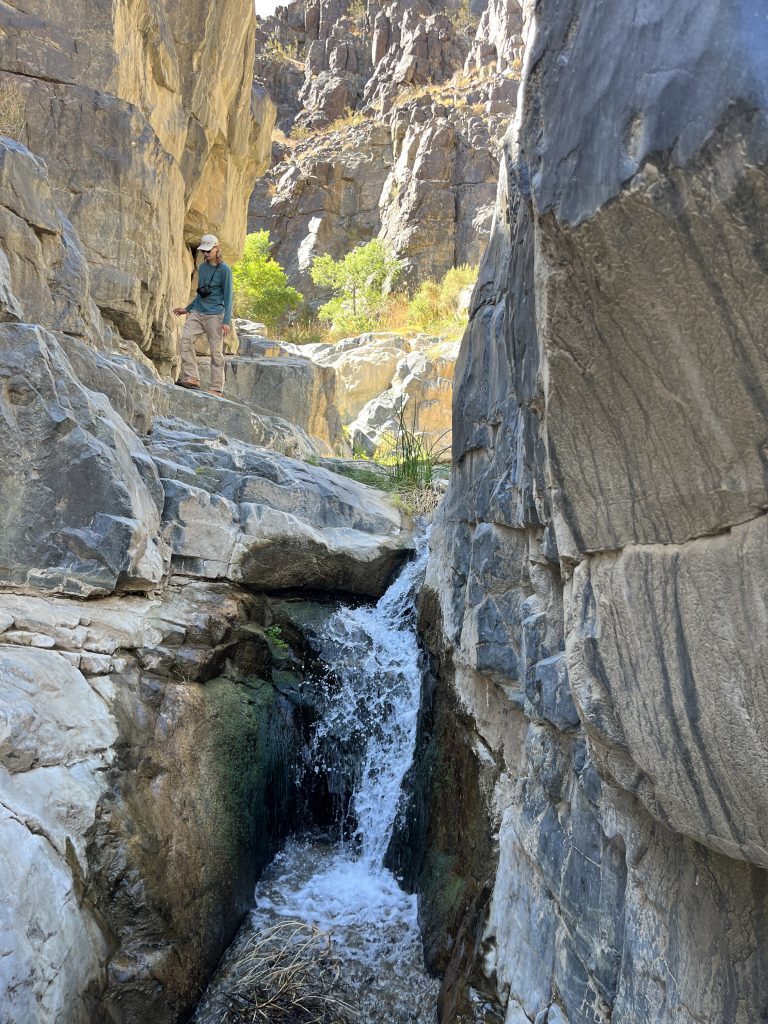
Field work never goes according to plan, which is inevitable and often the favorite moments to look back on. We call it type 2 fun when it may not be enjoyable at the moment, but becomes the best story at the dinner table to reflect on. Hitches into the field begin fresh faced and eager to hit the road, but by day four we are often haggard and longing for a shower. When we were capturing bats in Death Valley this year we were near the end of our hitch when it began to get hot, and our last site was at a place called China Garden on the edge of where the park meets BLM land. We drove on sandy washes in narrow canyons for about an hour until we began to see a cottonwood oasis emerge and finally reached our netting site. It’s called China Garden because someone years ago released koi fish into the spring and have since created a feeding log book accompanied by a water cooler filled with various kinds of fish food. We set up our mist nets at various locations in the spring while koi fish bubbled up in search of a handout and birds above jeered at us. As night ensued, we were skeptical of the bat activity we would encounter, but to our surprise we ended up catching a variety of species and barely had a moment to catch our breath during the busy night of capture. Sweat pooled as we wore all of our personal protective equipment (masks, gloves, lab coats, etc.) and when we finally finished there was a sense of relief and a communal chuckle about how epic the night was, like a high stress kitchen meticulously finishing the last plate of the night. The heat the following day was abysmal, and after a lack of sleep combined with an impressive dirt tan, we were in search of a refuge. I searched on the maps and saw that a waterfall was only about 15 minutes away from us so we sauntered on in search of cool water. We climbed through thick vegetation and followed a thin stream until it widened, the canyon walls became constricted, and small waterfalls began to appear. While down climbing canyon walls I ripped my pants trying to straddle the slot canyon but the embarrassment dissipated as we soaked our feet in the cold clear water and gazed upon a canyon not many tourists ever venture to see. One of my favorite parts of the job is getting paid to go places I often wouldn’t go on my own volition, and being baffled at the beauty these forgotten places hold. The trials and tribulations of field work only make the vistas sweeter, the jokes hit harder, and the community feel closer.
What do you feel you are getting out of the experience, professionally and/or personally?
This position has both challenged me professionally and personally. I have worked the gamut of wildlife positions from volunteer, to private consultant, to city worker, to research technician, to state biologist, to now a federal partner and each avenue comes with its rewards and challenges, however, the adversity we often face in my new role comes from federal uncertainties. Normally I would say that the challenges I encounter are coordinating field schedules, managing large data sets, reaching out to volunteers, learning to code data, navigating too hard to reach areas, and a slew of other tasks, but nowadays it seems that what I am getting out of the experience is heartburn. Federal uncertainty has manifested itself in a variety of ways but it has been tough adapting to the constant change that has marred how we operate day to day. Coworkers have become friends, then relieved of their positions. Federal workers incentivized to take buyouts and early retirements. New orders each day or week that take time out of scientific research in order to verify our value. Travel bans and spending limits that prevent productivity. Looming weight of funding freezes and the loss of a job without any retribution. I feel that despite the normal aspects I would get out of an experience like this, I am gaining an appreciation for adapting and improvising. Lately I have been harping on the silver linings and reveling in the fun of field work because we feel the pressure that it could be taken away at any moment. One of the most impactful things I’ve gotten out of this experience is people’s tenacity to perform great science despite the ominous clouds above. We have people overhauling data sets in case they are let go and others performing volunteer duties although they were already let go. I am impressed by people’s love for what they do even in the face of adversity and it has shown me both personally and professionally to fight for the causes you care about, because they are worth it, and the harder it becomes, the harder you have to work to preserve the things you got into this for.